

Nissan X-Trail
Nissan X-Trail Mild Hybrid N-Connecta review.
**** out of
For: Handsome, practical, reasonable fuel economy, excellent drive.
Against: I expected excellent fuel economy, no 4×4.
Price: £37,390
Competition: Peugeot 5008, Kia Sorento, SEAT Terraco, Skoda Kodiaq, Hyundai Santa Fe, VW Tiguan, Honda CR-V, Mazda CX_5, Toyota RAV4
“The impact of the mild hybrid system seems marginal at best”
“If this Nissan X-Trail is a mild hybrid,” I hear you say, “how does it work? And what’s the point?”
First of all, it’s not a hybrid at all. There’s not a big battery which works with an internal combustion engine (ICE) to figure out the best combination for maximum fuel economy like in a Toyota Prius. There’s no battery-only mode, so there’s almost no electric range at all.

A mild hybrid uses a more powerful battery than usual to enhance this petrol car’s systems which use electricity to operate and make them more efficient. So it’s not a hybrid at all. Why call it a hybrid then? Beats me.
Nissan said its mild hybrid X-Trail has a turbocharged 1.5-litre variable compression ratio petrol motor powering the front-wheels.
“In driving scenarios with relaxed driving and light acceleration, the engine switches to high compression ratio for optimized fuel efficiency. When more performance is needed, the compression ratio is adjusted to a low level. The powertrain is also equipped with 12v Mild Hybrid technology. The system provides torque assist, extended idle stop, quick restart and coasting stop, with benefits to both fuel economy and CO2 output,” Nissan said.
“When decelerating, energy is recovered through regeneration and stored in the lithium-ion battery. This charged energy is then used to run the car’s systems while the engine is stopped, while waiting at a red light for example. Additionally, a torque boost of around 6 Nm can be generated under acceleration,” according to Nissan.

Doesn’t seem enough of a bonus
Does it work? Nissan claims an average fuel economy of 39.8 mpg. I managed an average of 34.5 mpg over a route comprising about 1/3 fast motorway and the rest city/urban driving. That’s pretty good I’d say because this is a big machine. But it doesn’t seem enough of a bonus to justify this technology or as an improvement on regular hybrids.
As for the X-Trail itself, I found it to be a super agreeable SUV to drive. It was one of those rare machines that as soon as you strap yourself in and take control, it all just feels right. On the road, this huge vehicle inspired confidence. It sat flat through high-speed corners. The acceleration always seemed impressive. I don’t usually bother much with the paddles behind the steering wheel which put automatics into manual mode, but it was so easy, and the squat little gear selector for the CVT (constantly variable transmission) allowed you to quickly click it back into automatic.
There did seem excessive turbo lag when you were stopped and waiting to enter a roundabout or junction, but you will soon learn that if there’s a gap, you have to floor the accelerator to make it go. On the road, acceleration always seemed up to requirements.
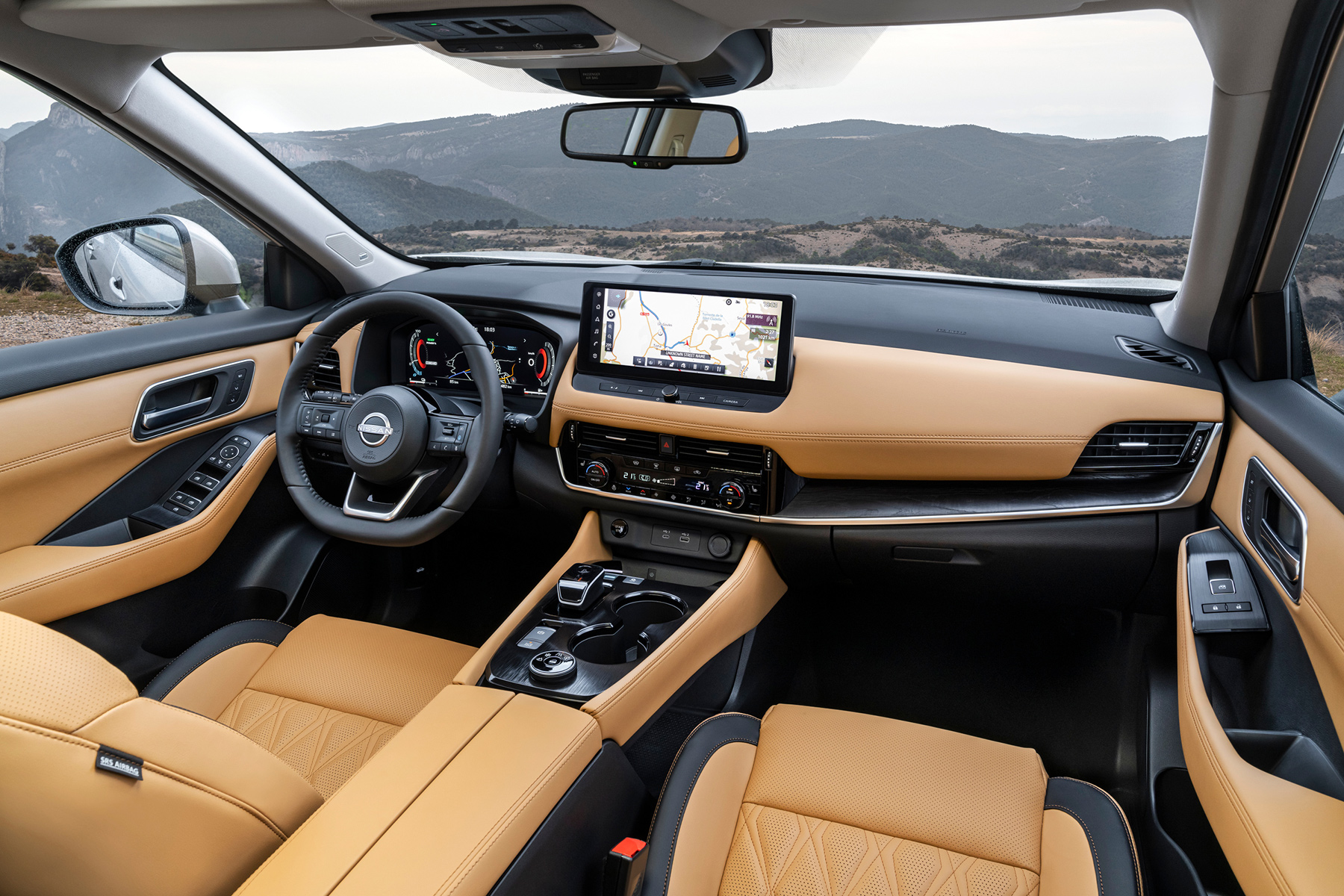
“I expected electrically-powered seats and four-wheel drive”
The interior and dash were classy, although I never mastered the Apple Car Play system. For this kind of money, I would have expected electrically-powered seats at the front, not to mention four-wheel drive. The idea of an iconic X-Trail with two-wheel drive sounds a bit of a travesty. But everybody does that now; even Range Rover. There’s plenty of room in the back, and the boot swallowed my golf gear whole.
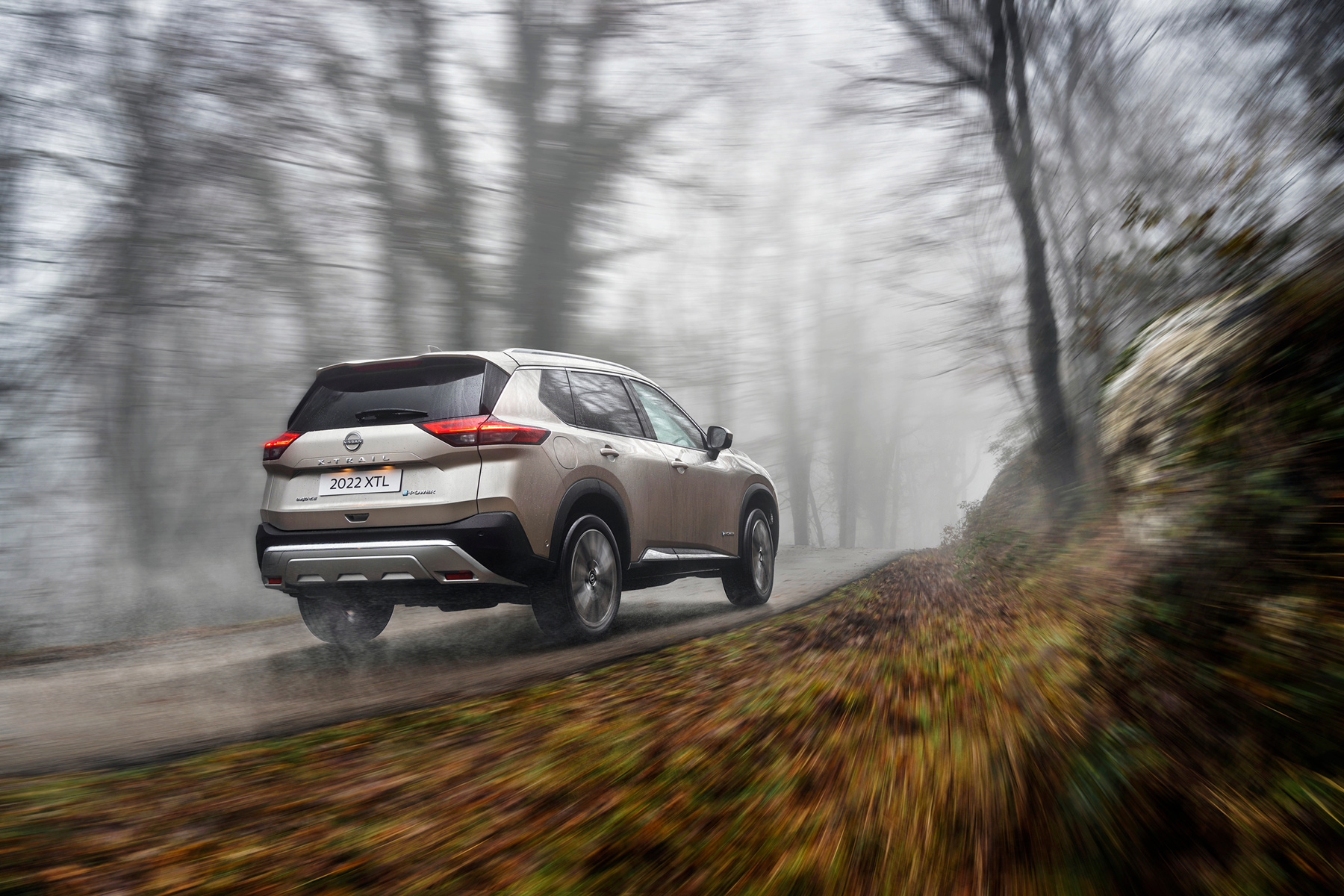
The new X-Trail range, now in its 4th iteration, is electrified across the range and prices start at £32,030. It is a handsome beast, in my view. Trim levels start at Visia, then move on to Acenta Premium, N-Connecta, Tekna and Tekna+. Standard equipment is generous. Four-wheel drive is available from Acenta Premium on up on this range of hybrids and mild-hybrids.
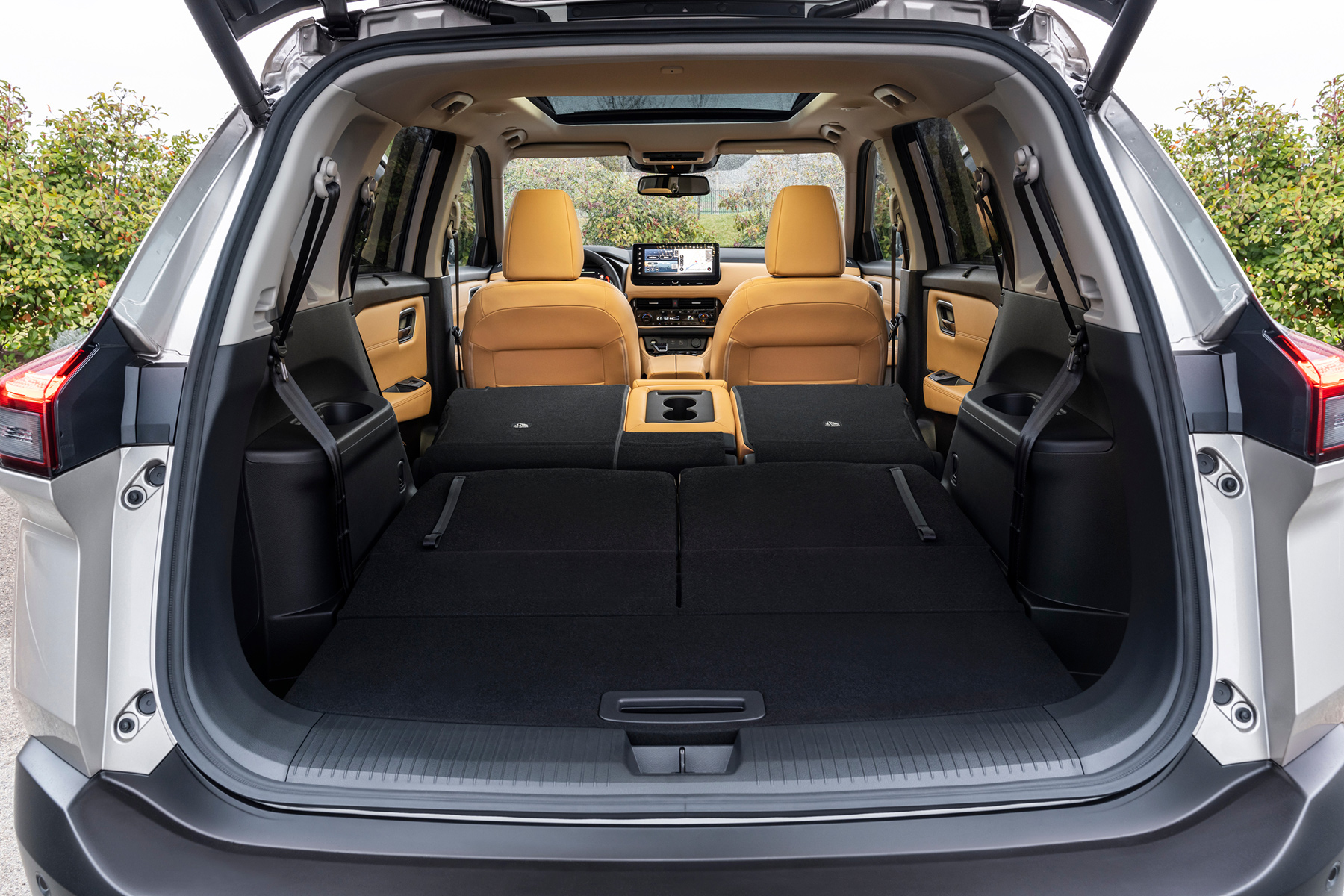
Verdict, and What to buy?
The impact of the mild hybrid system seems marginal at best. Sure, it boosts the fuel efficiency a bit, and does it with smaller batteries than required for a regular hybrid, so it is a bit less damaging to the environment, but only a bit. Probably a bit cheaper to make too. “Every little bit helps”, says Tesco, in what is probably the lamest claim to fame ever concocted by marketing experts.
I did take an instant liking to the X-Trail. It does look good, in my opinion, and the paint job was terrific. For some reason it generated instant empathy, and there might have been more if the front seats were electrified, and it had four-wheel drive. My experience with Nissan recently through the Qashqai and Ariya electric SUV have been very positive, especially in terms of quality, which seems to have been turned up a notch or two.
You could make a strong case for any of the vehicles competing in this sector. My other favourite amongst the Peugeot 5008, Kia Sorento, SEAT Terraco, Skoda Kodiaq, Hyundai Santa Fe, Volkswagen Tiguan, Honda CR-V, Mazda CX 5, Toyota RAV4 would be the Mazda simply because I’ve had a few Mazdas and they always give more than they promise.
| NISSAN X-Trail Mild Hybrid n-Connecta | |
|---|---|
| Engine: | 1.5 litre petrol |
| Power: | 163 hp |
| Torque: | 300 Nm |
| Gearbox: | CVT automatic |
| Fuel consumption: | average 39.8 mpg – WintonsWorld test 34.5 mpg |
| Drive: | front-wheels |
| Top Speed: | 124 mph |
| Acceleration: | 0-60 mph 9.4 seconds |
| CO2: | 161 g/km |
| Length: | 4,680 mm |
| Width: | 1,840 |
| Height: | 1,725 |
| Weight: | 1,744 kg |
| Wheel-base: | 2,705 |
| Suspension: | McPherson/multi-link |
| Competition: | Peugeot 5008, Kia Sorento, SEAT Terraco, Skoda Kodiaq, Hyundai Santa Fe, VW Tiguan, Honda CR-V, Mazda CX_5, Toyota RAV4 |
| Rating: | **** out of 5 |
| Price: | £37,390 |
| For: | Handsome, practical, reasonable fuel economy, excellent drive |
| Against: | I expected excellent fuel economy, no 4X4 |
Nissan X-Trail

No comments yet.